Bohemian Pilsner / Bock / Kölsch


All three of these "beers" are German styles, which is where lagering historically originated as a trade practice and has corroborated the reputation that country has with beer connoisseurs. Budweiser, Miller, Coors, etc. are German lagers, as bastardly hard as that is to say.
Bohemian Pilsner
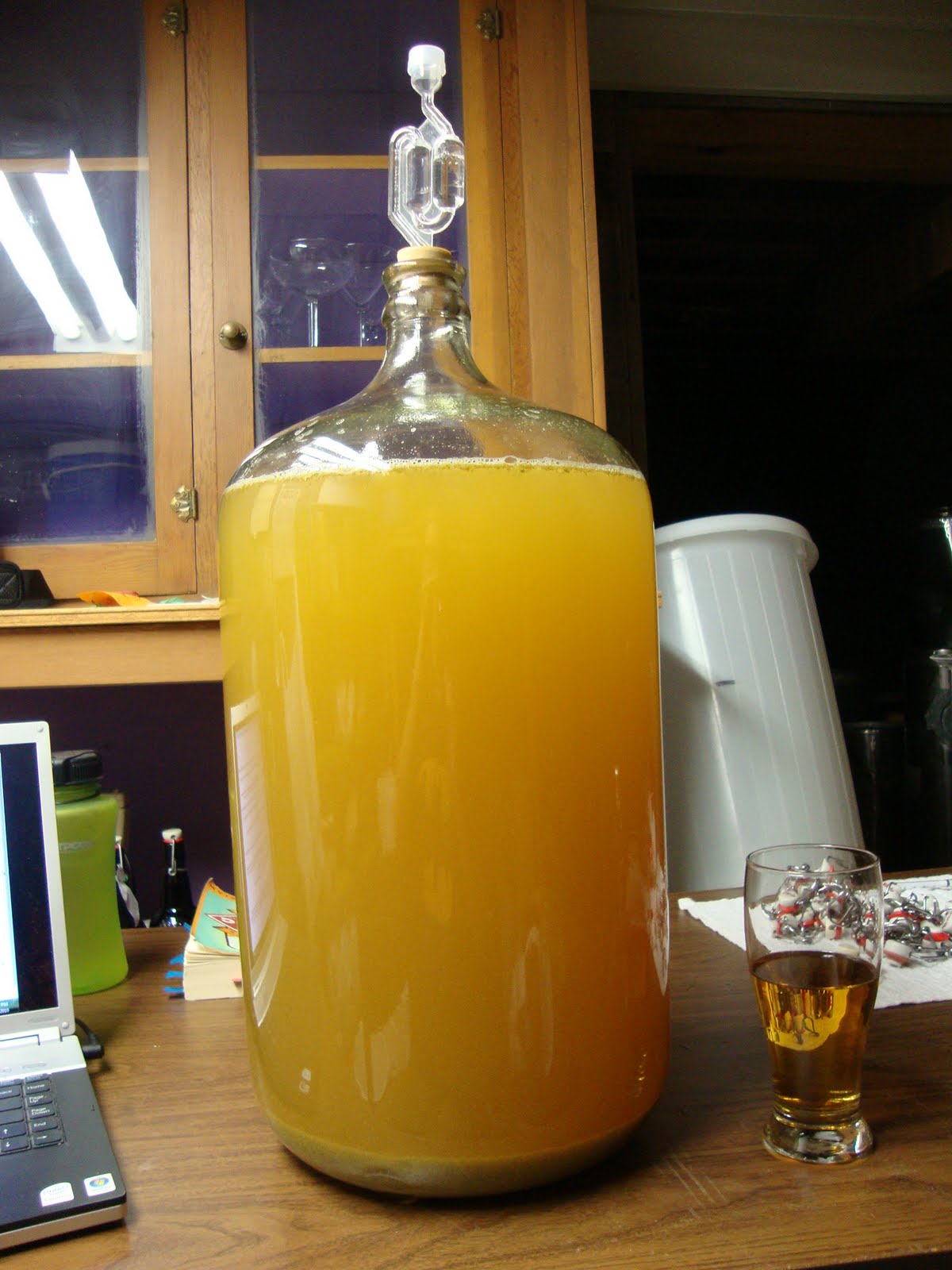
Pilsner, originating from the Pilsen region of the Czech Republic, has more pilsner barley which is very light in both taste and color than the recipe I used which utilized carapils, a browner caramely color and flavor. Thus its darker color making it a brown German pilsner with lager yeast. This batch was all-grain, 9lbs of organic pilsner barley and 1lb of aromatic with hallertauer and tettnanger hopes (traditional German variety). For the first time with a lager yeast (which requires much colder temperatures than ales, and is top fermenting yeast) I did a primary fermentation at 15 degrees Celsius then carried the thing out to the barn to sit for about 2 months. Not only is
 lagering about cold temperatures (as you can imagine, leaving it from early October to early December it ranged between plus 10 and -25c) it's also about 'lagering,' the process of leaving the young beer in fermentation for prolonged periods of time. However this beer was gravitating to 5% alcohol at best, so...it froze solid. Really solid. After thawing, it was terrible. I felt there was an off chance that it could be recovered based on the fact that making ice beer is essentially scooping out layers of ice in slowly freezing beer, so the water content would be seperated leaving the alcohol to be racked out. This was not the case, the liquids had completely separated but even the obviously thicker solution towards the bottom was complete swamp water. tough shit, that's what I get for assuming a barn is insulation enough against old man winter.
Bock
Bock is a German lager of high alcohol content. Historically, this beer was reserved for royalty and the upper class. The peasant brewer would make this style and have to transport it over great distances to pay tithing or royalties to the landlord, requiring a higher alcohol content to prevent spoiling on the trip. Similarly to the pilsner, I had to lug this thing quite a distance and I feel the utmost respect for both the pre-capitalist indentured poor but also for their ability to lug this stuff for miles. Hence, I named this batch Back-Break Bock. As you can tell from the top image of the bock, its very rich and brown but also having a lot of texture. This is predominantly because of the increased starch and sugar present in the style, which leads to higher alcohol content. To vigorously boil that much
 thick substance to a point of concentration, it would have taken me at least a day. So, I decided to let the yeast do the rest of the work breaking the concentrations down. In order to get this thickness I did a combination of all-grain and extract brewing. Added 10lbs of aromatic and carapils to the mashtun and 7lbs of malt extract to the brewpot. In addition I added about 2 cups of brown sugar, a very noticeable flavor after all said and done. This batch sat for 1 month instead of 2 in the barn and it miraculously survived! Both length of time for lagering as well as higher alcohol content made it harder to freeze solid, so what i discovered when i moved it to thaw was how much it resembled a slushy. Lo and behold, it thawed just fine and has been one of my best beers yet. 10% folks.
Kölsch
This style is a special German ale which is suited for lagering and lager temperatures. So, im adding it to my lager portfolio. However, it was a disaster. After reading up on this beer, it seems to be one of the more proprietary rights/regionally protected styles out there. Originally brewed from the waters of the Rhine in Cologne, it has been secured as a heritage trademark which cannot be brewed beyond or without the traits of its origin. So, no other commercial brewery can attempt this beer unless they are on that river or own a piece of Gaffel or other breweries. The softness of the water plays a large role in its flavoring, but it also widely known for its lightness in color. I bought an all grain kit at Midwest brewing supply in Minnesota on my last foray and
 gave it a shot. I knew that i would be leaving my brewery for the winter months so I took the poorly chosen route of single stage fermentation for this batch. Tasting it all the way through was a little odd. It had a very yellow color and never seemed to be lacking in carbonation. But there was also something very...lemony about it. My assumption is that because I did not do a two stage fermentation and directly went to the cold storage lagering for two weeks in a 0 Celsius garage, both the yeast was not as active to consume and die off and grew too sluggish and just hung in the wort. After months in the bottle, this beer is far too carbonated and far too thick. Even when stored in the fridge and opened, it immediately fizzes up to the top and causes an overflow, not to mention the mass amount of sediment at the bottom. I typically hate light beers, but this one received very little chance to be dismissed as a style. I was very excited about trying to make it for the very fact that as a homebrewer I could subvert this German monopoly on what i would surely coin a sub-par beer, but I didn't even make it that far. Someday Kölsch. For more on Kölsch and possibly investing in Kölsch 15 years ago, heres a funny PR video."A 700-year old."